That is the path to paradise / Likewise the road to ruin.
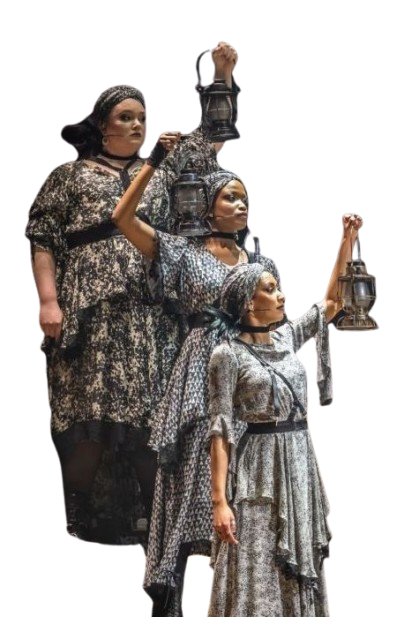
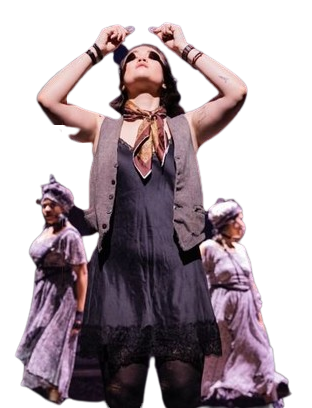
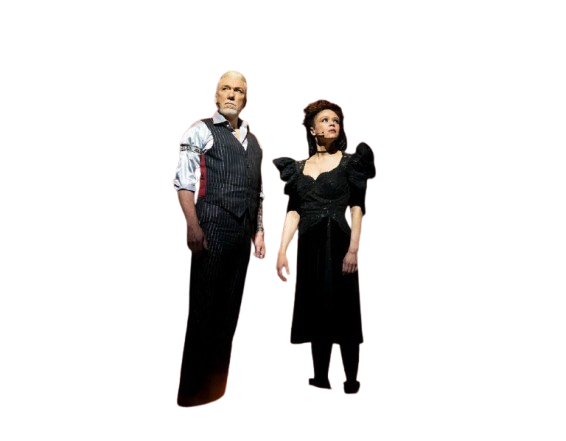
Hadestown is a musical adaptation of the greek tradgedy of Orpheus and Eurydice. Originally written as a concept album folk opera in 2006 by Anaïs Mitchell, Micheal Chorney and Ben T. Matchstick, it's developed significantly over the years. Set in an extratemporal but distinctly depression-era esque time period, it follows Eurydice, a starving, world-weary young girl and Orpheus, a poor but naive and spritely boy, their blossoming love and it's tragic ending.
Hadestown may genuinely be one of my favourite musicals of all time. Anais Mitchell is a phenomenal writer, the way they've adapted the mythology to the current day is borderline clairvoyant.. In the same way that ancient Greeks used the story of Hades and Persephone to explain the changing seasons, she builds on this tradition to draw parallels to global warming through their crumbling relationship.
"Lover what have you become? / Coal cars and oil drums / Warehouse walls and factory floors / I don't know you anymore / In the meantine up above / The harvest dies and people starve / Oceans rise and overflow / It ain't right and it ain't natural.
She goes on to comment on the exploitation of workers through the way Hadestown (The location) operates. In the unfortunately prophetic song 'Why We Build the Wall', it is shown how the workers in Hades are brainwashed into a sense of nationalism of sorts; using language that explicitly evokes an "us versus them" narrative about the outside world. Claiming that the wall is built to keep out "The enemy" - the song goes on to reveal that that "Enemy" is poverty itself. Hades claims that the people on the outside want what they have. They want the work that they are doing, although the work they do is constant and grueling, so much so that each and every one of them has forgotten who they were before they were in Hadestown. But the Workers know this is their purpose because they don't have time to think about anything else, because if they do someone else hungry and desperate will take that spot. And if not work, what else is there?
'The enemy is poverty / And the wall keeps out the enemy / And we build the wall to keep us free / What do we have that they should want? / We have a wall to work upon! / We have work and they have none /And our work is never done'
The relationship between Hades and Eurydice is intentionally kept vague. During Chant, Hades laments how Persephone doesn't understand his displays of affection. Displays which are ultimately desperate attempts to keep her with him longer in the underworld, these displays simoltaneously destroying the place she calls her home, and rendering the Underworld almost uninhabitable. He tells her that if she doesnt appreciate him, he will turn his attention to someone who will. Someone who is vunerable enough to mistake these huge displays of wealth and power as genuine love and safety.
'If you don't even want my love / I'll give it to someone who does / Someone grateful for her fate / Someone who appreciates / The comforts of a gilded cage / Someone who could love these walls / That hold her close and keep her safe / And think of them as my embrace'
The comparisons of Eurydice to a caged bird continue in ‘Hey Little Songbird’, where Hades manipulates Eurydice into selling her soul to him and joining him in Hadestown. This song is – for lack of a better word – uncomfortably seductive? Patrick Page’s incredible baritone doesn’t help, but even the lyrics are almost flirtatious; ‘Hey, little songbird, cat got your tongue? / Always a pity for one so pretty and young’ However, his true intentions shine through in the motifs of each character.
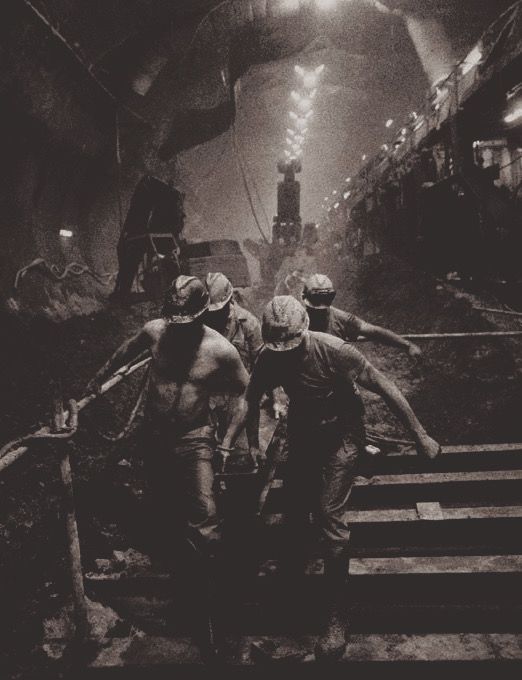
Throughout this and the last song Eurydice has been compared to a songbird, Hades even refers to her indirectly as a Canary in a coal mine – this is significant because canaries were used as a precaution to check for toxic gases in mines. If the canary stops singing, it's a sign it has been killed and the mine is unsafe and the workers must leave. This both foreshadows how Eurydice dies at the end of the song when she is brought down into the mine (The underworld), as well as how she attempts to lead the workers out of Hadestown during Wait for Me (Reprise) at the cost of her death (Again).
The bird motif for Eurydice is also significant due to the duality of her and Hades. Throughout ‘Hey Little Songbird’ a rattlesnake’s warning rattle can be heard, both implicating Hades as predator and Eurydice as prey, but also a reference to how Eurydice died in the original myth, being bitten by a snake.